Water Damage Restoration in Lakeland, MN
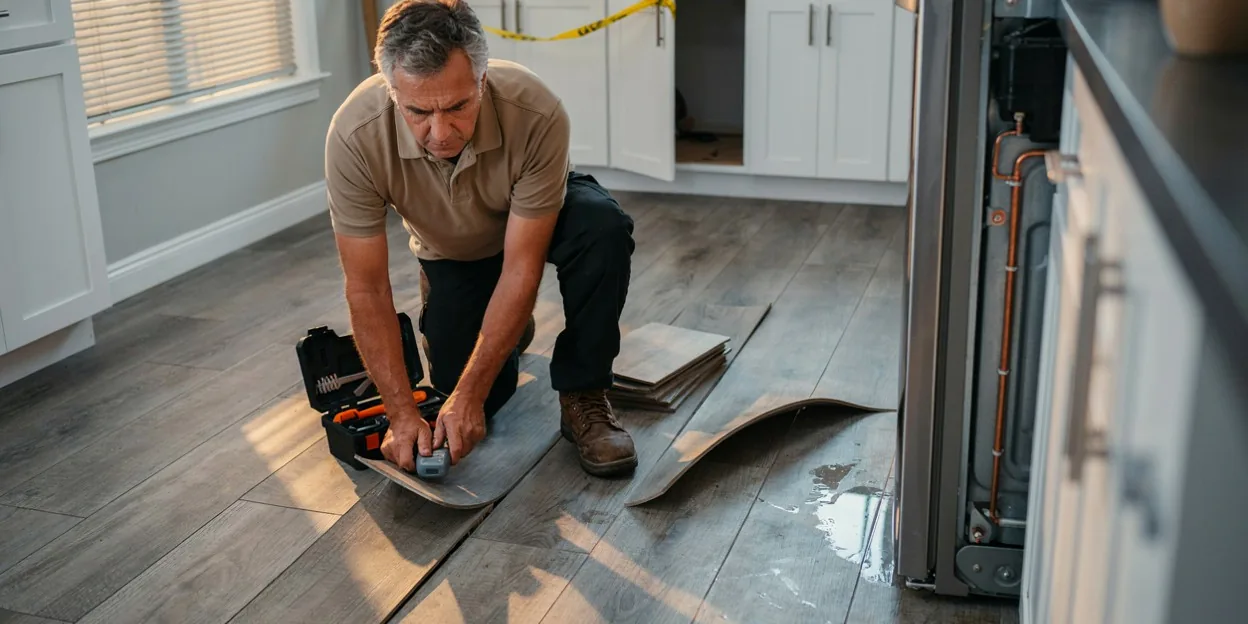
Lakeland is the river city east of Woodbury where Interstate 94 crosses the St. Croix into Wisconsin, a town that Moses Perin platted around 1849 as a trading partner to Hudson on the far bank. The lumber mills are long gone and the city is a commuter town now, with 1950s and 1960s ramblers along the older streets, 1970s and 1980s splits on the hill, and a few newer houses on larger lots. Most of the city is on private wells and septic systems rather than a municipal main.
A well and a septic system change every water job. The shutoff is the pump breaker, not a valve at the street, and the water the crew pumps out and the condensate the dehumidifiers make cannot go down the drain to the field.
Lakeland calls reach an independent local water damage provider who is used to wells and septic fields. The provider asks about the well and the septic on the first call.
Lakeland water damage on a well and septic lot
A rambler lower level that flooded when a line froze in the garage wall is frozen pipe cleanup with the pump breaker as the first move. A split-entry whose pit quit during a summer storm is sump pump failure cleanup. A water heater in a utility room on a well system that let go is water heater leak cleanup, and the pressure tank beside it gets checked at the same time.
A river-bluff city with its own hall
The City of Lakeland runs its offices from Quinnell Avenue, and a basement rebuild is permitted through the city, with the St. Croix riverway rules applying to the lots along the bluff. The river below the bluff is the reason for the well-and-septic pattern: the city never built a main, and the houses on the hill draw from the same aquifer the valley has always used.
Call (651) 461-4569 and tell us what you see. We put you through to a local water damage provider serving Lakeland.
Services Available in Lakeland
Basement Flooding Cleanup
Water pulled off the slab and out from under the carpet pad in a finished lower level, then the walls metered before any drywall comes off.
Sump Pump Failure Cleanup
Cleanup after the pit overflowed in a storm or a power outage, with the water gone and the finished basement dried on readings.
Ceiling Water Damage Repair
A stained or sagging ceiling under an upstairs bathroom or an ice dam, drained, dried, and opened only as far as the meter says.
Frozen Pipe Cleanup
The wall, floor, and lower level a split supply line soaked during a January cold snap, pumped out and dried once the water is off.
Ice Dam and Roof Leak Water Damage
Wet attic insulation, ceilings, and exterior walls dried after meltwater backed up behind an ice dam or hail opened the roof.
Water Heater Leak Cleanup
A tank that let go in a lower-level utility room and the carpet, drywall, and storage it soaked, extracted and dried.
Structural Drying
Air movers and dehumidifiers set by moisture readings and run until framing, subfloor, and drywall reach their dry target.
Water Damage Reconstruction
Drywall, trim, carpet, and paint put back in a finished basement after the drying log shows the framing is dry.