Water Heater Leak Cleanup in Woodbury, MN
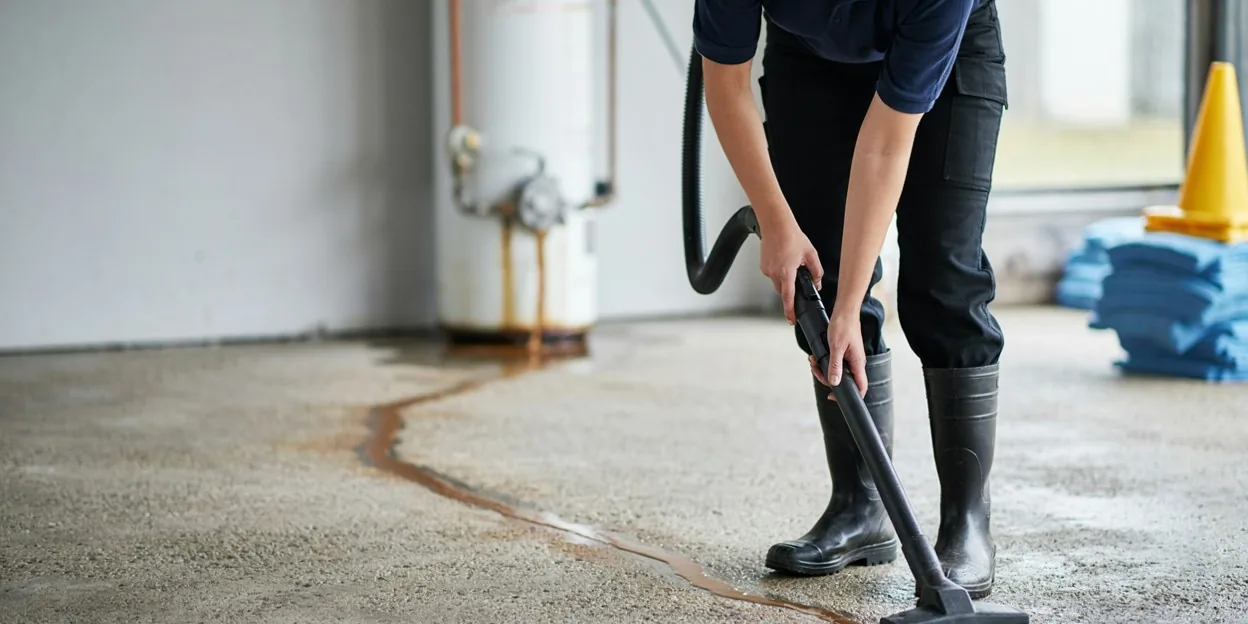
The shower went cold halfway through, and when you went down to look at the water heater there was a sheet of water across the utility room floor, past the furnace, and out under the door into the carpeted hallway. The tank was still filling itself and still leaking. This site connects you by phone with an independent local provider who cleans up after water heater failures in Woodbury and the surrounding Washington County suburbs.
Shutting the tank down and finding where the water went
The crew's first move is to make sure the tank is off: the cold supply valve closed, the gas valve off or the breaker pulled, and the tank draining to a floor drain if there is one nearby. A tank that rusted through at the bottom keeps refilling as fast as it leaks until that valve is shut, and forty or fifty gallons at a time is plenty to cross a basement.
Then the meter follows the water. Utility rooms in Woodbury houses sit on the same slab as the finished side, and the water runs under the door, under the pad, and up into the drywall of the hallway and the bedroom beyond. The crew reads every wall the water could have reached and the storage shelving along the way.
Cold valve, gas or breaker, then the boxes
Turn the cold water valve on top of the tank clockwise until it stops. Turn the gas valve to off, or flip the water heater's breaker if it is electric. If the tank has a drain valve at the bottom and there is a floor drain, a garden hose will empty it. Keep the power to the lower level off if the water reached an outlet or the furnace.
Get the boxes, the holiday bins, and anything else on the floor of the utility room up onto shelves or upstairs. Photograph the tank, the floor, and the wet carpet. Then call, and say roughly when the water started.
What survives a tank failure and what does not
The water in a heater is clean, so the crew has more to work with than after a pit overflow. Carpet that was caught the same day can often be lifted, dried, and relaid over new pad. Pad goes regardless. Drywall in the utility room is usually unfinished and dries in place; drywall on the finished side gets a flood cut where the readings say the bottom plate is wet.
Cardboard on the floor is a loss, and anything inside it is a judgment call the crew makes with you. Plastic bins usually kept their contents dry. Once the standing water is out, structural drying runs until the slab under the carpet and the bottom plates read dry, and the trim and drywall come back under water damage reconstruction.
Tanks in Woodbury are reaching the age where they fail
Woodbury built tens of thousands of houses in the 1990s and 2000s, and most of them have been through at least one water heater by now. A tank lasts eight to twelve years in this water, and the second and third replacements in those houses are coming due in a stretch. The tanks sit in a lower-level utility room next to the furnace and the sump pit, usually on the slab with no pan under them, and a corner of the finished basement on the other side of a hollow door.
The pit is a small mercy. A tank that lets go slowly near the sump pit sends some of the water where the pump can move it. A tank that fails while the family is at a hockey tournament in Blaine for the weekend fills the utility room and the hallway before anyone knows. Houses with the tank in a closet on the main floor are rarer here, and those losses drop through the floor into the finished ceiling below.
A water heater that fails suddenly is the kind of loss many policies cover, although the tank itself is usually not, and a tank that has been weeping onto the floor for months may be treated as maintenance. This site cannot tell you which one your adjuster will see. Ask the crew for photos of the tank and the floor, the first readings, and a written scope. If the water crossed into the finished side and soaked the family room, basement flooding cleanup covers that part of the job.
Calling about a water heater in Woodbury
Have the address ready and say whether the tank is shut off. Tell the person who answers where the water heater sits, which rooms the water reached, whether the power to the lower level is off, and when the tank was last replaced if you know. Call (651) 461-4569.